Incorporation of CO2 into C(sp3) Centres: Base-Driven Carboxylation of Benzylic Boronic Esters
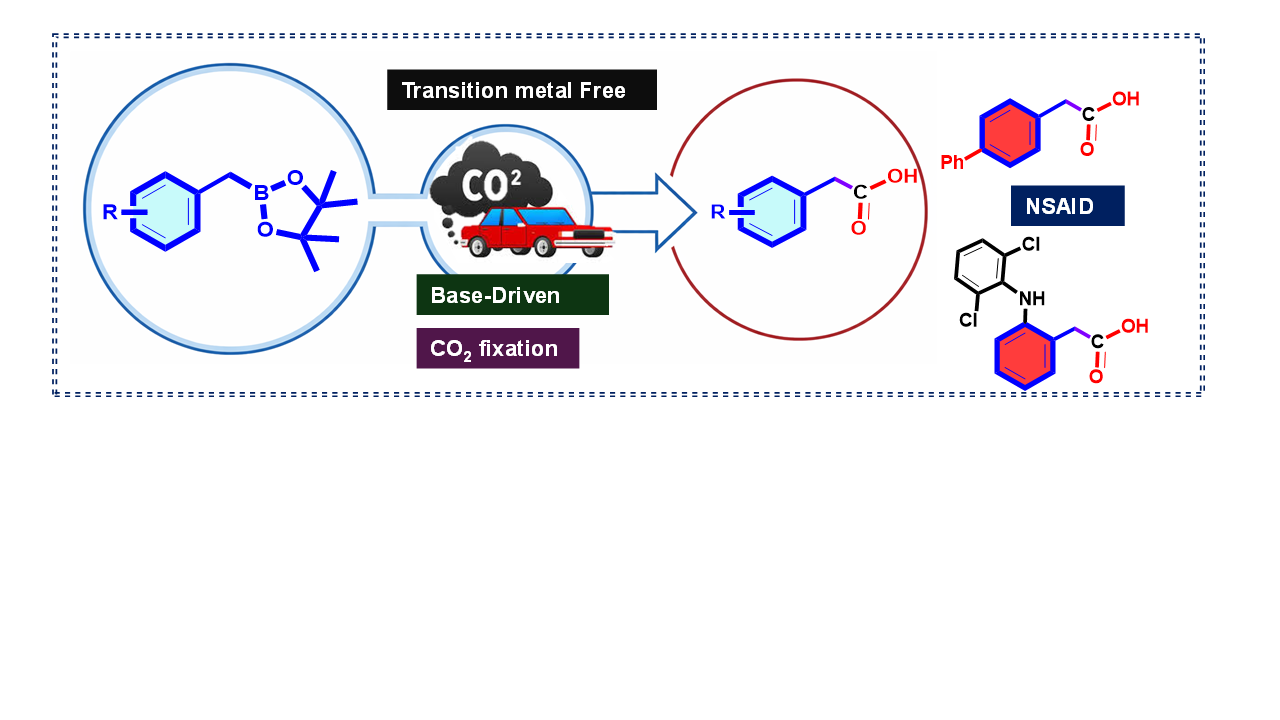
This study presents a practical, transition-metal-free method for using CO₂ as a C1 synthon via KOEt-promoted carboxylation of primary benzylic boronic esters under ambient CO₂ pressure. Through systematic optimisation, it was found that ethoxide serves as an exceptionally effective base, allowing for broad functional group tolerance and efficient C–C bond formation without the need for cryogenic conditions. Various electron-withdrawing and sterically hindered substrates produced phenylacetic acids in good yields with excellent chemoselectivity. However, electron-rich and secondary systems exhibited limited reactivity. The synthetic application of this protocol was further demonstrated by the gram-scale preparation of NSAID drugs, highlighting its significance for the synthesis of pharmaceutically important compounds.
ChemistrySelect, 2026, Just Accepted
Read the article: Incorporation of CO2 into C(sp3) Centres: Base-Driven Carboxylation of Benzylic Boronic Esters